interstate forum "paths of the future ljubljana - novo mesto - karlovac - zagreb"
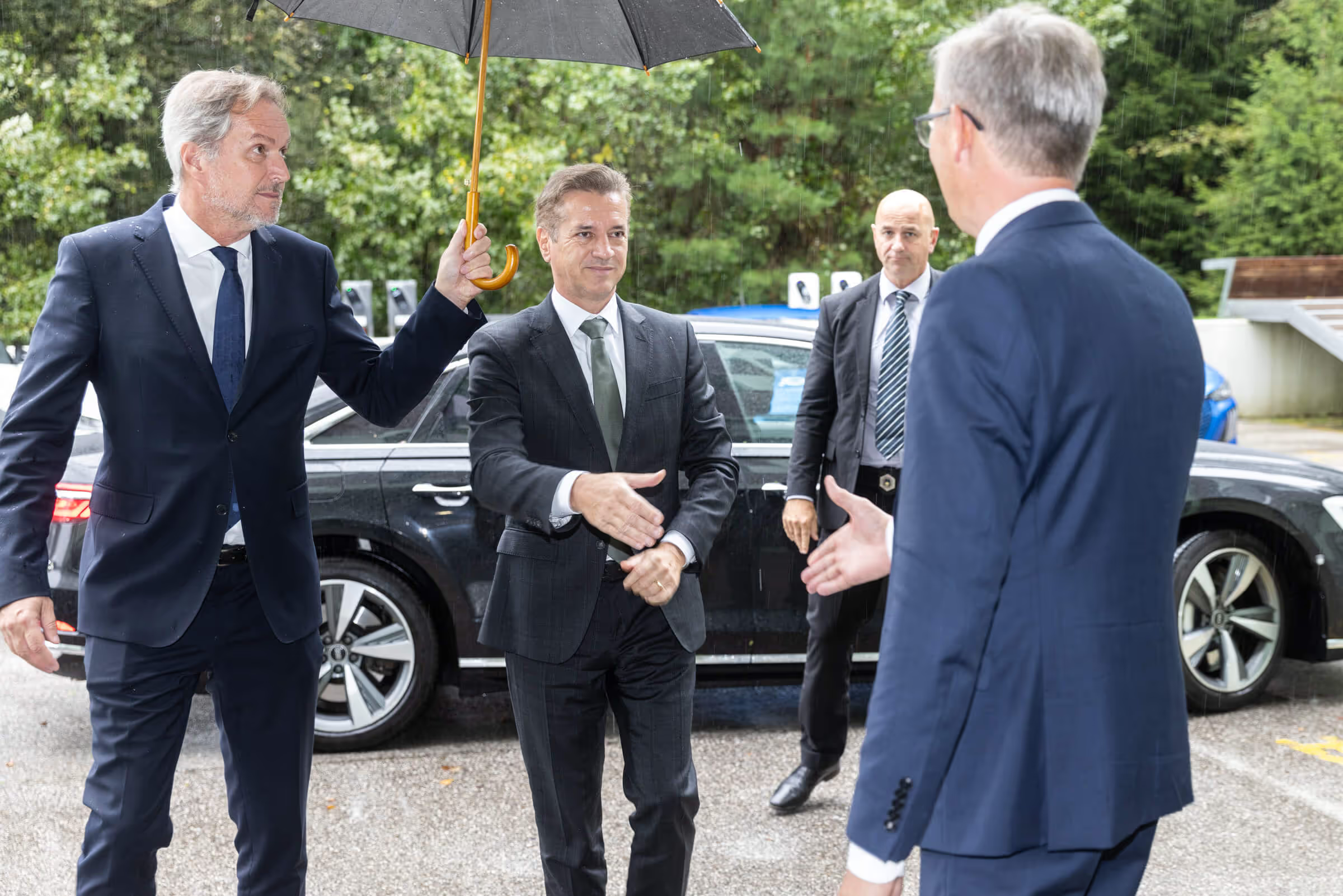
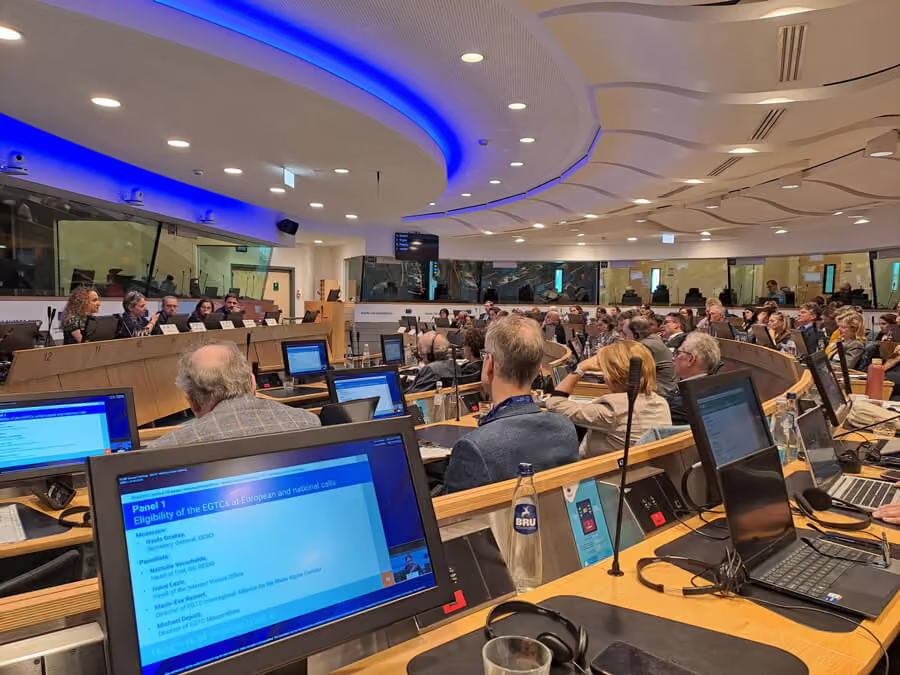
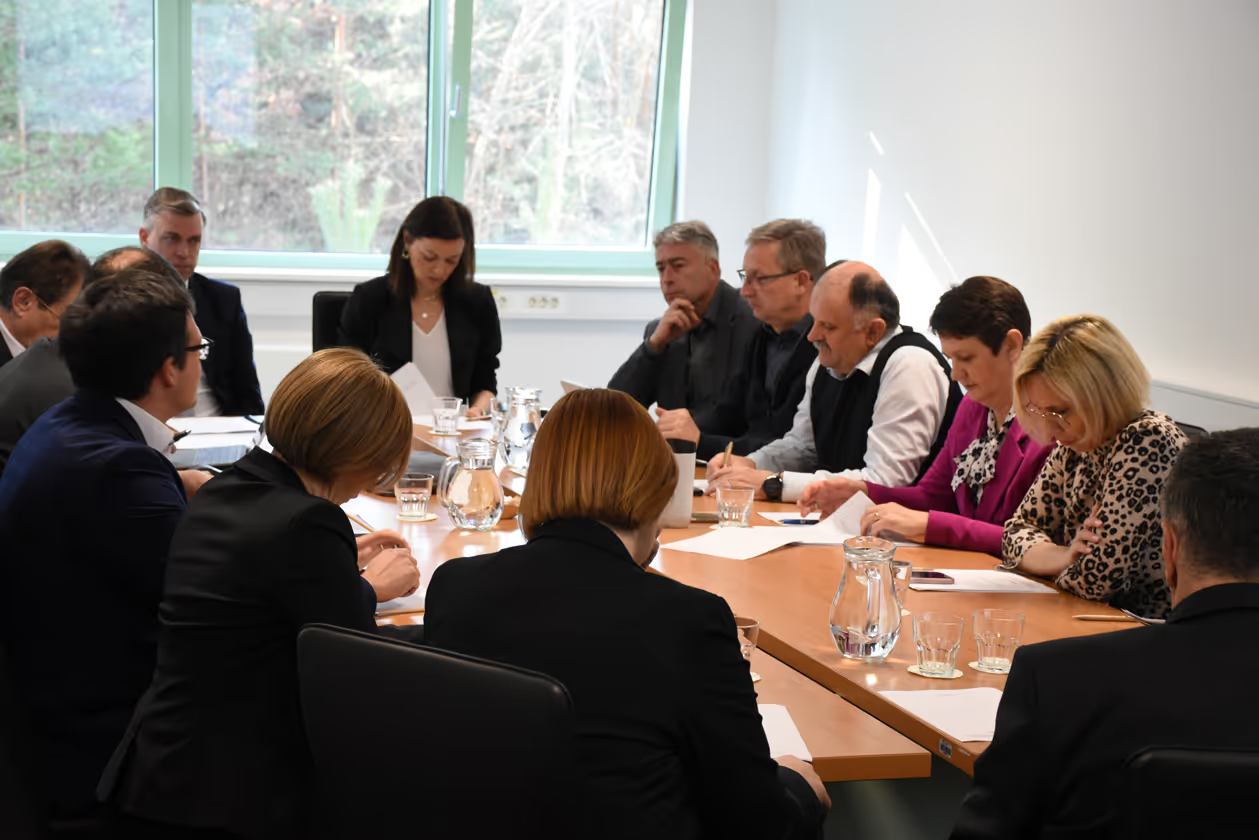
On Thursday, 20 November 2025, the European Grouping of Territorial Cooperation »Future Paths« organized cross-border conference “Future Paths Ljubljana – Novo mesto – Karlovac – Zagreb” at the Business Incubator in Črnomelj. Conference brought together numerous important representatives of Slovenian and Croatian railway companies, ministries, DRI, several mayors from both sides of the border, as well as representatives of regions, development agencies, spatial planners and many others.
The event was opened by the Deputy Mayor of Črnomelj, Dubravko Čengija and the Director of the European Grouping, Marko Vukobrat, who emphasized that cross-border cooperation is a fundamental value of the European Union and that the connection of nations is not to be taken for granted. He praised the courage and vision of local authorities on both sides of the border that are supporting the revitalization of the railway corridor while also cooperating in other areas important for local residents.
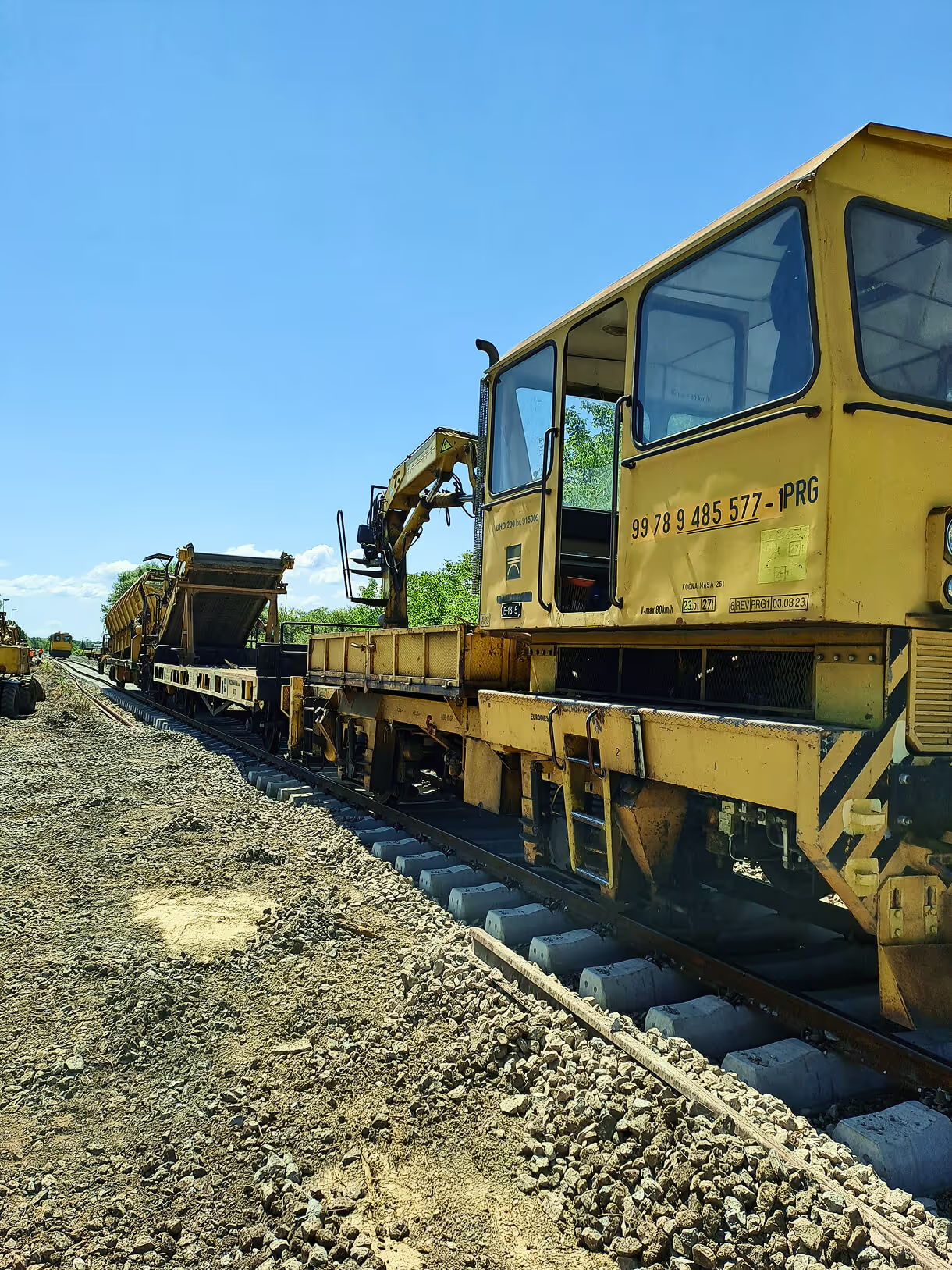
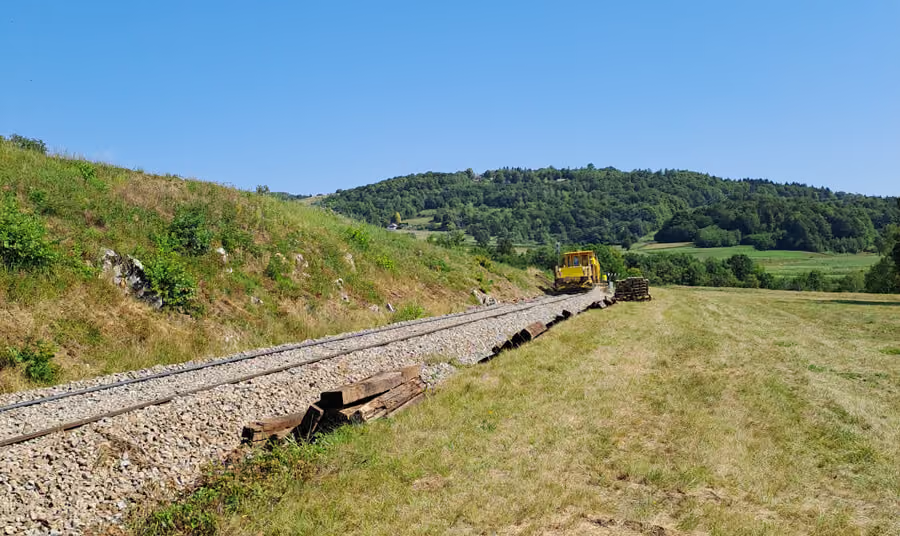
This was followed by a presentation of the Croatian railway infrastructure development strategy by Mr. Milan Vuković, Head of Sector at the Ministry of the Sea, Transport and Infrastructure. He announced that by 2029 a double-track, electrified railway enabling speeds above 160 km/h will be built between Zagreb and Karlovac, significantly shortening travel time. The next section of the cross-border corridor, between Karlovac and Ozalj is in the final phase of reconstruction, and rail traffic is expected to be re-established soon. For the section between Ozalj and the Slovenian border, he highlighted that a feasibility study is currently being prepared and may be completed next year, followed by the preparation of documentation for the construction permit.
On the Slovenian side, activities were presented by Franc Zemljič from DRI and Peter Cokan from the Slovenian ministstry of infrastructure (DRSI). They presented the Ljubljana railway station, which is already under construction. For the Ljubljana – Ivančna Gorica section, a variant study has been prepared, which will be publicly displayed in early 2026 after the environmental report is completed. They also presented other key projects, such as the Škofljica railway station and the Novo mesto Passenger Hub, which will integrate bus and rail transport at the current bus station location, while the stations Novo mesto Center and Novo mesto Kandija will be closed.
The event continued with the roundtable “Future paths”. Vesna Hajsan Dolinar (Deputy Prefect of Karlovac County), originally from the cross-border area, fondly recalled the times when the region was connected by rail and when she frequently travelled to Ljubljana by train, expressing her belief that such connections will be restored soon. She sees numerous opportunities for residents on both sides of the border in cross-border cooperation. Franci Bratkovič, Director of the Development Centre Novo mesto, sees the future in economic cooperation and the exchange of knowledge and experience. Robert Piščanc, Head of the Railway Sector at DUJPP, highlighted the importance of joint efforts in reducing car use and offering residents high-quality public transport alternatives. He also mentioned several interesting project activities being developed in cooperation with the forum organizer. Franc Zemljič from DRI presented several encouraging data points showing a significant increase in railway passenger numbers, while expressing concern that freight transport on regional lines is not following the same trend.
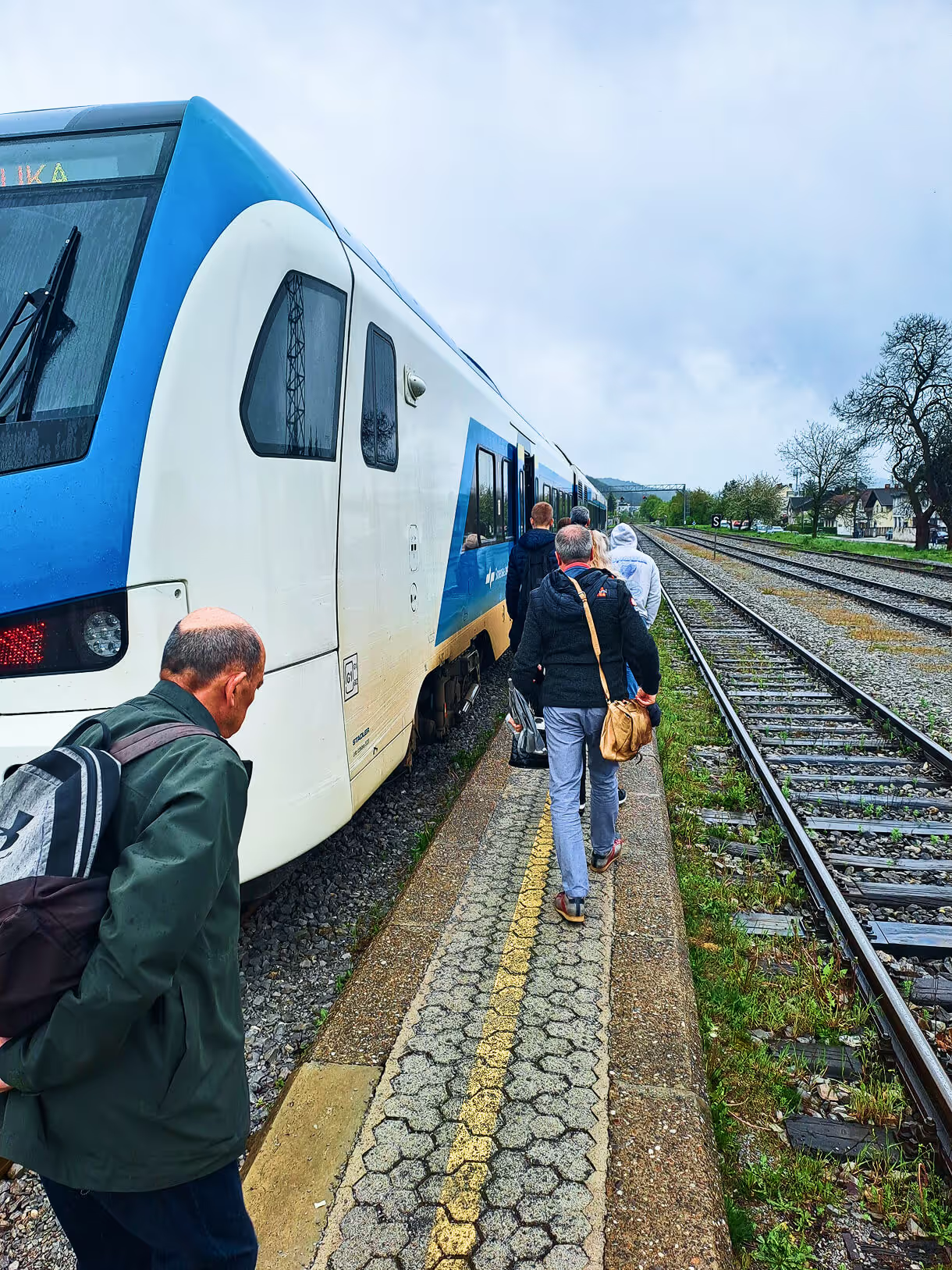
Ivan Ružić from HŽ Passenger Transport stated that discussions regarding the re-establishment of the Karlovac – Novo mesto – Ljubljana connection, using a replacement bus service on the still unreconstructed Croatian section, are in their final phase, and that the first connections can be expected soon. He also presented the results of testing Končar’s electro-battery and battery trains, which are being introduced on certain segments of the Croatian network, with the possibility of their use on a smaller section of the Ljubljana – Novo mesto – Karlovac – Zagreb corridor.
In his concluding remarks, the Director of the European Grouping, Marko Vukobrat, emphasized that this is a visionary project which, despite long-term goals, has successfully brought together decision-makers on both sides of the border. The project represents a model example of cross-border cooperation, one of the key pillars of European development. For this reason, EU decision-makers recognize it as important and worthy of stronger support. It is a project that surpasses current political mandates and perhaps even one full generation, but leads towards a major infrastructural achievement that will permanently connect the economy, people, tourism, knowledge and energy of an important region in Slovenia and Croatia.
At the EGTC Paths of the Future, they express satisfaction with the strong support on both sides of the border, noting that most decision-makers see the project as an encouragement to accelerate decision-making processes. The most evident proof of this is the visible acceleration of works on the Karlovac – Ozalj section. Without the initiative of the EGTC, this progress would not have occurred. They also welcome the efforts on the Slovenian side, which will gradually improve the competitiveness of railway transport, while highlighting the importance of continuing procedures for the preparation of the National Spatial Plan for the Ljubljana – Novo mesto (Birčna vas) section.
Foto: Jernej Rozenberger

.avif)
.avif)